

Industrial Valves in Mumbai: Industrial Valve Functions, Types, and Uses
- infra valves
- Aug 24
- 4 min read

Industrial valves play a critical role in controlling the flow of liquids, gases, and slurries in various industrial processes. Their importance spans multiple sectors such as oil and gas, chemicals, water treatment, and power generation. In Mumbai, a major industrial hub, the demand for reliable and efficient valves is significant. This article explores the essential industrial valve functions, types, and their practical applications, providing a comprehensive guide for professionals seeking optimal flow control solutions.
Understanding Industrial Valve Functions
Industrial valves regulate, direct, or control the flow of fluids by opening, closing, or partially obstructing passageways. Their primary functions include:
Flow Control: Adjusting the rate of fluid flow to meet process requirements.
Pressure Regulation: Maintaining system pressure within safe limits.
Isolation: Allowing sections of a pipeline or equipment to be shut off for maintenance or safety.
Backflow Prevention: Ensuring fluid flows in one direction only.
Mixing and Diverting: Combining or redirecting fluid streams as needed.
Each valve type is designed to perform one or more of these functions efficiently. Selecting the right valve depends on the specific industrial application, fluid characteristics, pressure, temperature, and operational requirements.
Common Types of Industrial Valves and Their Uses
Industrial valves come in various designs, each suited for particular functions and environments. Below are the most widely used types in Mumbai’s industrial sectors:
Gate Valves
Gate valves operate by lifting a gate out of the fluid path. They provide a straight-line flow with minimal pressure drop when fully open. These valves are ideal for on/off control rather than flow regulation.
Applications: Oil and gas pipelines, water treatment plants, and chemical processing.
Advantages: Tight sealing, low pressure loss, and durability.
Limitations: Slow operation and not suitable for throttling.
Globe Valves
Globe valves feature a movable disk-type element and a stationary ring seat. They offer precise flow control and are commonly used for throttling applications.
Applications: Steam systems, cooling water systems, and chemical feed lines.
Advantages: Good throttling capability and reliable sealing.
Limitations: Higher pressure drop compared to gate valves.
Ball Valves
Ball valves use a spherical disc to control flow. They provide quick shutoff and are highly reliable for tight sealing.
Applications: Oil and gas, petrochemical industries, and water pipelines.
Advantages: Fast operation, minimal leakage, and durability.
Limitations: Not ideal for throttling.
Butterfly Valves
Butterfly valves consist of a rotating disc to regulate flow. They are compact, lightweight, and suitable for large diameter pipes.
Applications: Water treatment, HVAC systems, and fire protection.
Advantages: Quick operation, low cost, and space-saving design.
Limitations: Less effective for high-pressure applications.
Check Valves
Check valves allow fluid to flow in one direction only, preventing backflow. They operate automatically without manual intervention.
Applications: Pump discharge lines, chemical processing, and power plants.
Advantages: Protect equipment from damage due to reverse flow.
Limitations: Potential for water hammer if not properly selected.
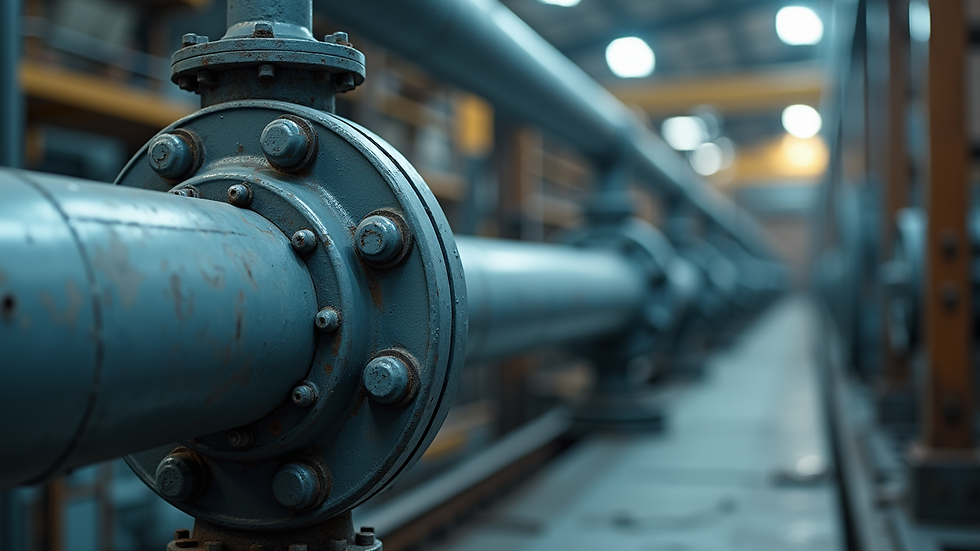
Close-up view of an industrial gate valve installed in a pipeline.
Selecting Valves for Specific Industrial Applications
Choosing the right valve requires careful consideration of several factors:
Fluid Type: Corrosive, abrasive, or viscous fluids demand specific materials and valve designs.
Pressure and Temperature: Valves must withstand operating conditions without failure.
Flow Requirements: Whether the valve is for isolation, throttling, or backflow prevention.
Maintenance Needs: Ease of access and repairability impact long-term operational costs.
Compliance and Standards: Valves should meet industry standards such as API, ANSI, or ISO.
For example, in oil and gas applications, ball valves with high-pressure ratings and corrosion-resistant materials are preferred. In water treatment, butterfly valves offer cost-effective flow control for large pipelines.
Industrial Valves in Mumbai: Market and Supply Considerations
Mumbai serves as a strategic location for sourcing industrial valves due to its proximity to major industrial zones and ports. The availability of diverse valve types and customization options supports the needs of critical industries.
When procuring valves, it is essential to work with suppliers who provide:
Quality Assurance: Certified products that meet international standards.
Technical Support: Assistance in valve selection and application.
After-Sales Service: Maintenance, repair, and spare parts availability.
Customization: Tailored solutions for unique process requirements.
I recommend exploring options from reputable manufacturers and suppliers to ensure reliability and performance. For those seeking reliable sources, industrial valves mumbai offers a comprehensive range of high-quality valves suitable for various industrial sectors.

Eye-level view of an industrial butterfly valve installed in a water treatment facility.
Enhancing Operational Efficiency with Proper Valve Selection
Proper valve selection and maintenance contribute significantly to operational efficiency and safety. Key recommendations include:
Regular Inspection: Detect wear, corrosion, or leakage early.
Preventive Maintenance: Schedule timely servicing to avoid unexpected failures.
Training Personnel: Ensure operators understand valve functions and handling.
Upgrading Technology: Consider automated valves for remote control and monitoring.
Documentation: Maintain records of valve specifications, maintenance, and performance.
Implementing these practices reduces downtime, extends valve life, and optimizes process control.
Final Thoughts on Industrial Valve Applications
Industrial valves are indispensable components in managing fluid flow across critical industries. Understanding their functions, types, and appropriate applications ensures optimal system performance. Mumbai’s industrial landscape benefits from access to a wide range of valves that meet stringent quality and operational standards.
By prioritizing precise valve selection, maintenance, and supplier partnerships, industries can achieve enhanced safety, efficiency, and reliability in their processes. This approach aligns with the goal of becoming a trusted global supplier of industrial flow control solutions, supporting the growth and sustainability of vital sectors worldwide.


Comments